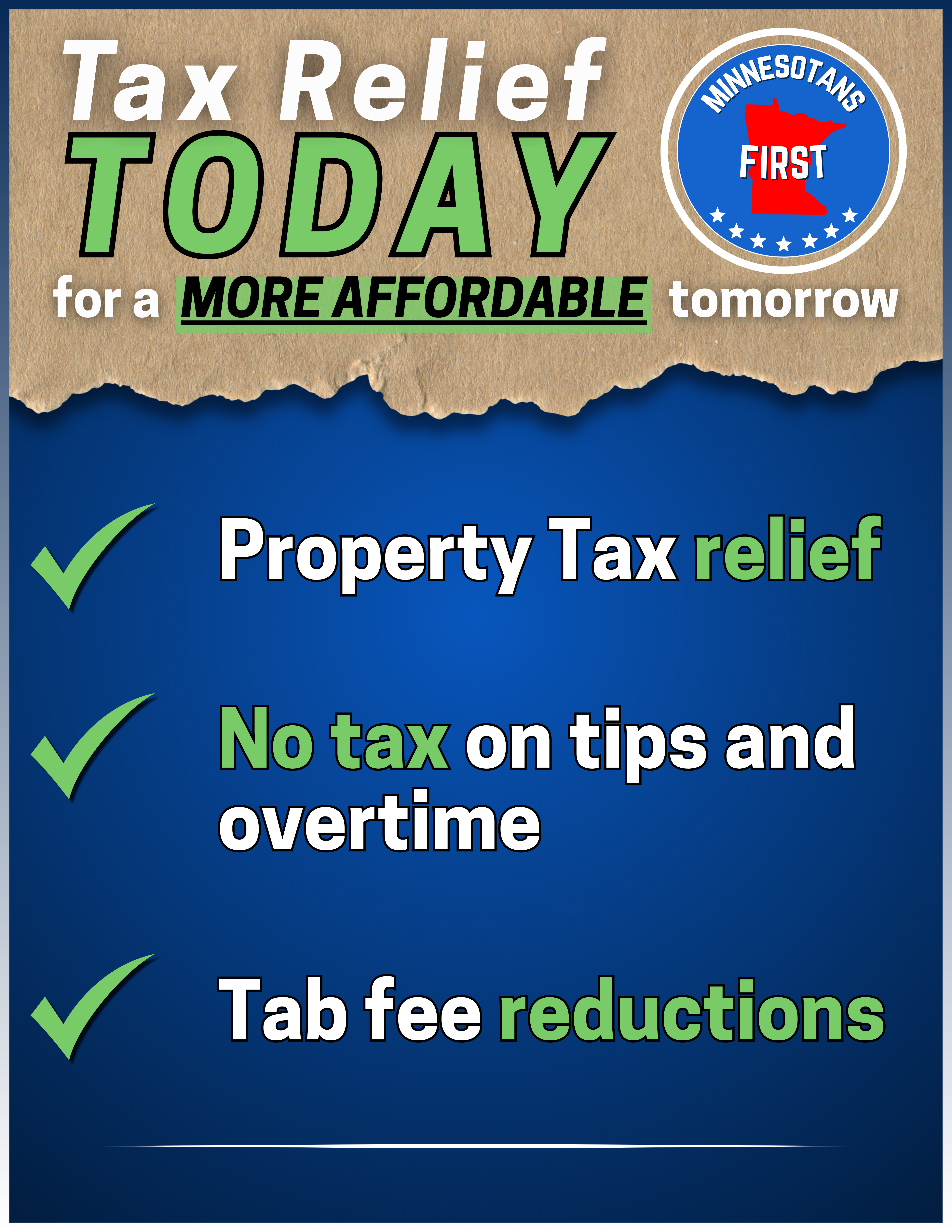
ST. PAUL, MN – Senate Republicans today released several bills to provide tax relief that will make a difference in the lives of Minnesotans. The bills propose targeted changes for broad relief for workers, homeowners, and drivers across the state.
“The bills today begin to address three areas that Democrats have more expensive: wages, home ownership, and buying a car,” Senate Republican Leader Mark Johnson (East Grand Forks) said. “No matter where you live in Minnesota, you are getting less in your paycheck and paying more for property taxes and license tab fees. Minnesotans know best how to spend their paychecks, and we want to give them more control over their household budgets, while creating a resilient state budget that can withstand any storm.”
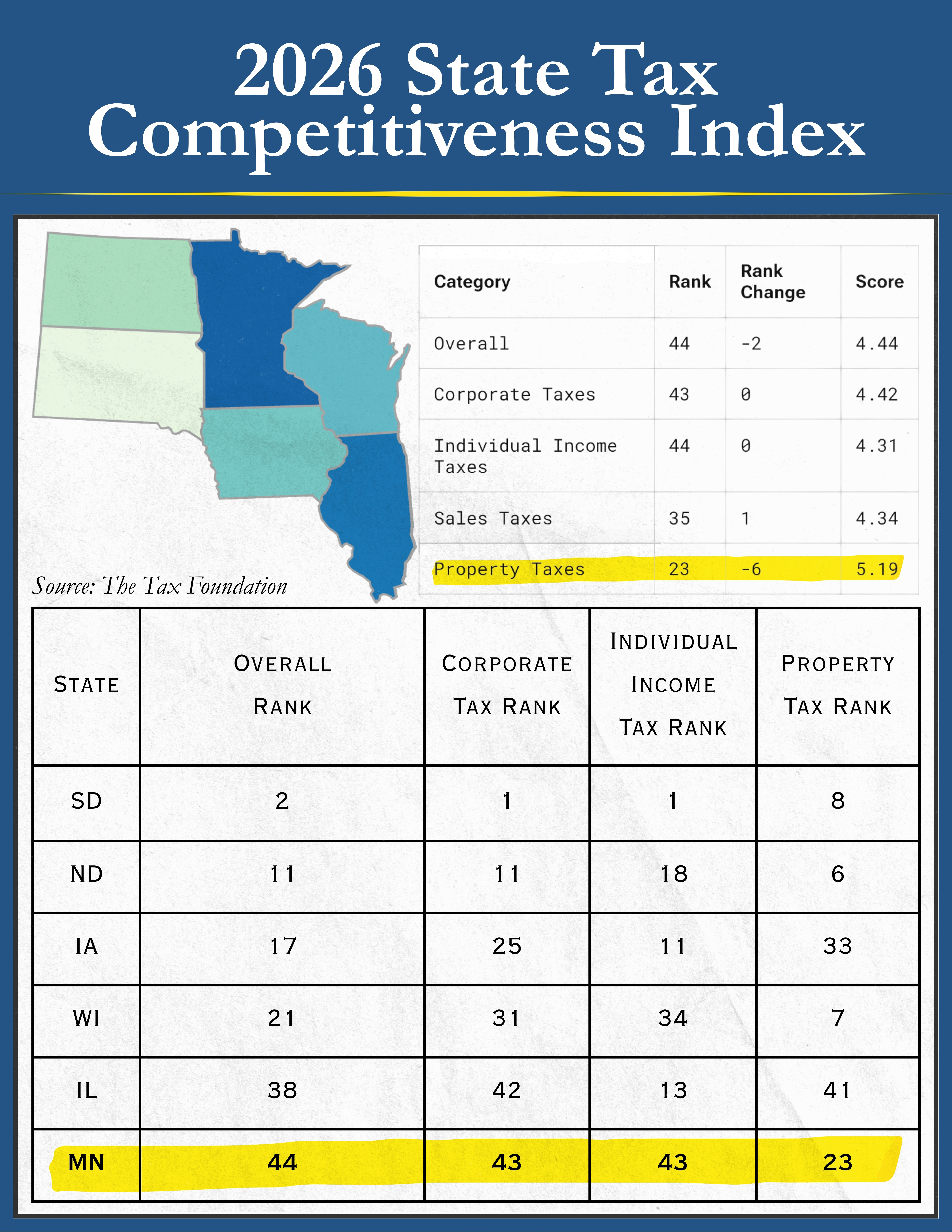
The first bill addresses the astronomical rise of property taxes last year, totaling as much as a billion dollars all together. Last year, about 250 mayors from across the state called for better fiscal constraint from legislators because fraud, mandates, and a state spending spree were forcing them into difficult budget situations.
To address the sticker shock, Sen. Michael Kreun (R- Blaine) is proposing to cap property taxes at the rate of inflation, plus 50% of population growth for cities and counties over 2,500 residents. Rates could be increased over the cap but only if they are approved at the ballot box.
“Home ownership is out of reach for too many, and property taxes are making harder to achieve and maintain the American dream,” Sen. Kreun said. “Capping property taxes to keep pace with inflation prevents sticker shock, and forces local governments and the legislature to live within their means. Passing dozens of unfunded mandates from the state forces our communities into difficult and expensive decisions. But, if there is a true need, the voters should have a say on larger increases.”
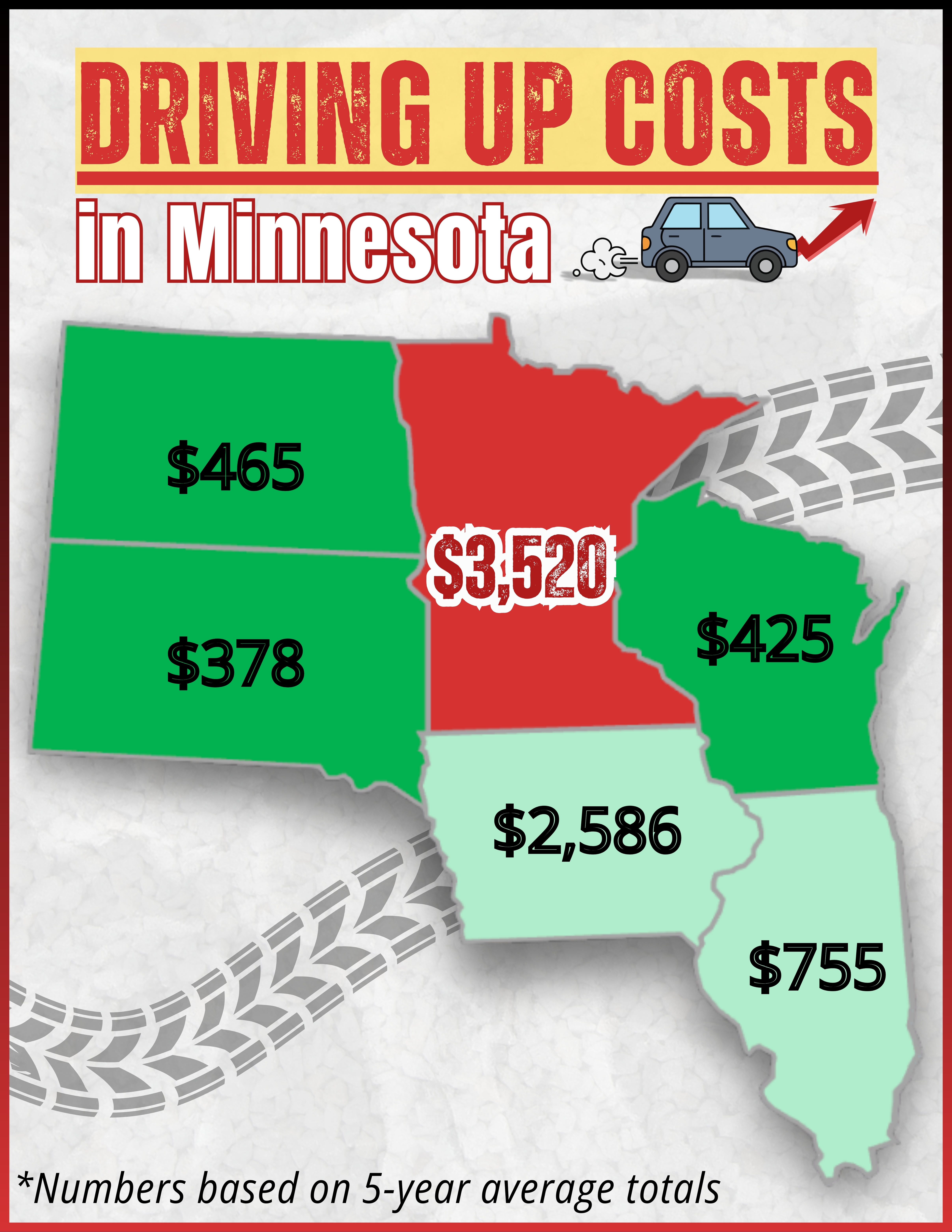
This summer, Minnesotans were shocked to see some license tab fees remain stubbornly high, costing drivers thousands of dollars. In 2023, Democrats not only increased the base tab rate, but also slowed the rate of depreciation, resulting in higher tab fees year over year. The change means tab fees are the biggest source of funding for the state’s transportation budget. Sen. John Jasinski (R-Faribault) proposed a bill to undo these changes and save drivers more than $800 over five years.
“Democrats could have used the $18 billion surplus to provide stressed Minnesotans with relief, but instead they raised more than $10 billion in taxes and fees. This was one of them,” Sen. Jasinski said. “Minnesota’s tab fees are the most expensive in the region. It’s not even close. We heard the frustrations and we are ready to fix it."
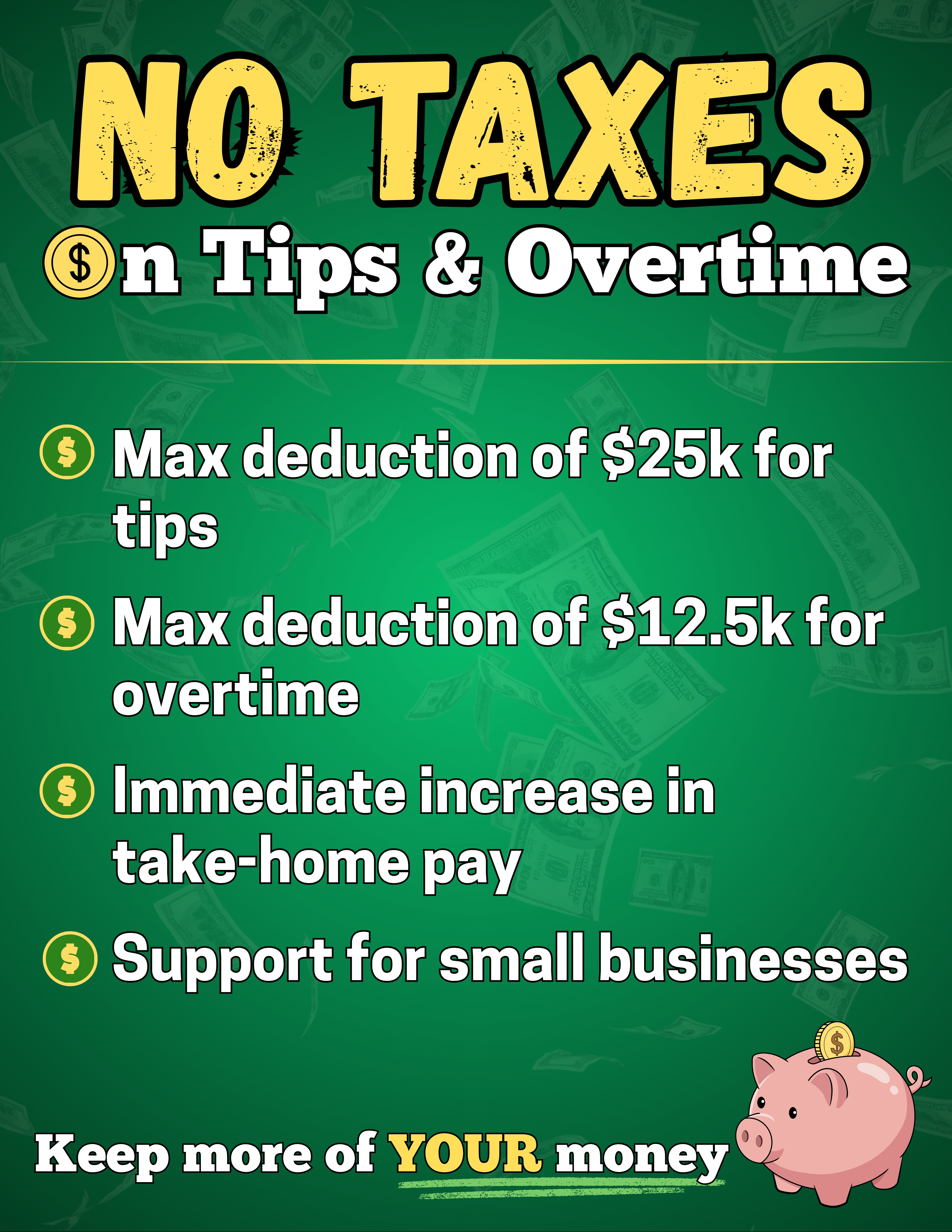
Whenever the federal government makes changes to the tax code, state lawmaker considers “conformity” to adopt the changes as well. Sen. Karin Housley (R- Stillwater) has two bills with conformity changes to end taxes on tips and overtime for workers. This policy has broad, bipartisan support, and gives service industry and hourly workers more of their hard-earned money in their paychecks every month. There is a maximum deduction on tips of $25,000 and for overtime, and a maximum deduction of $12,500. Both deductions phase out once income hits $150,000 for single-filers, and $300,000 for married-joint filers.
“No tax on tips and overtime is one of the most popular policies and with good reason - it’s because it is immediate relief for some of the hardest working folks in Minnesota,” said Sen. Housley. “Oftentimes as legislators, we put forward plans that could save you, a few hundred dollars here or a thousand dollars there, but always down the line. Long-term savings matters, but what people really want is relief they can feel in their bank accounts immediately."
The bills proposed at the press conference serve as the foundation for tax relief that makes a difference. Minnesota’s recent budget forecast was bolstered by a stronger national economic outlook, while Minnesota is facing stagnant job growth. Making the state more affordable, with more money in people’s paychecks, reducing vehicle costs, and stabilizing property taxes will encourage economic growth and prosperity across the state.
“In our house, the extra money from these kinds of tax savings would go a long way with the grocery list that seems to grow with my three boys and the clothes that sure as heck don’t,” said Senator Julia Coleman (R–Waconia). “I know a lot of families across Minnesota are in the same boat and could use that breathing room too. We have to ask ourselves, are we going to focus on practical help for Minnesotans? That's what these bills are about.”
Graphics: