Senate Republicans held a press conference today on Tax Day to spotlight how DFL tax increases and unchecked spending have driven up costs and made life less affordable for Minnesota families.
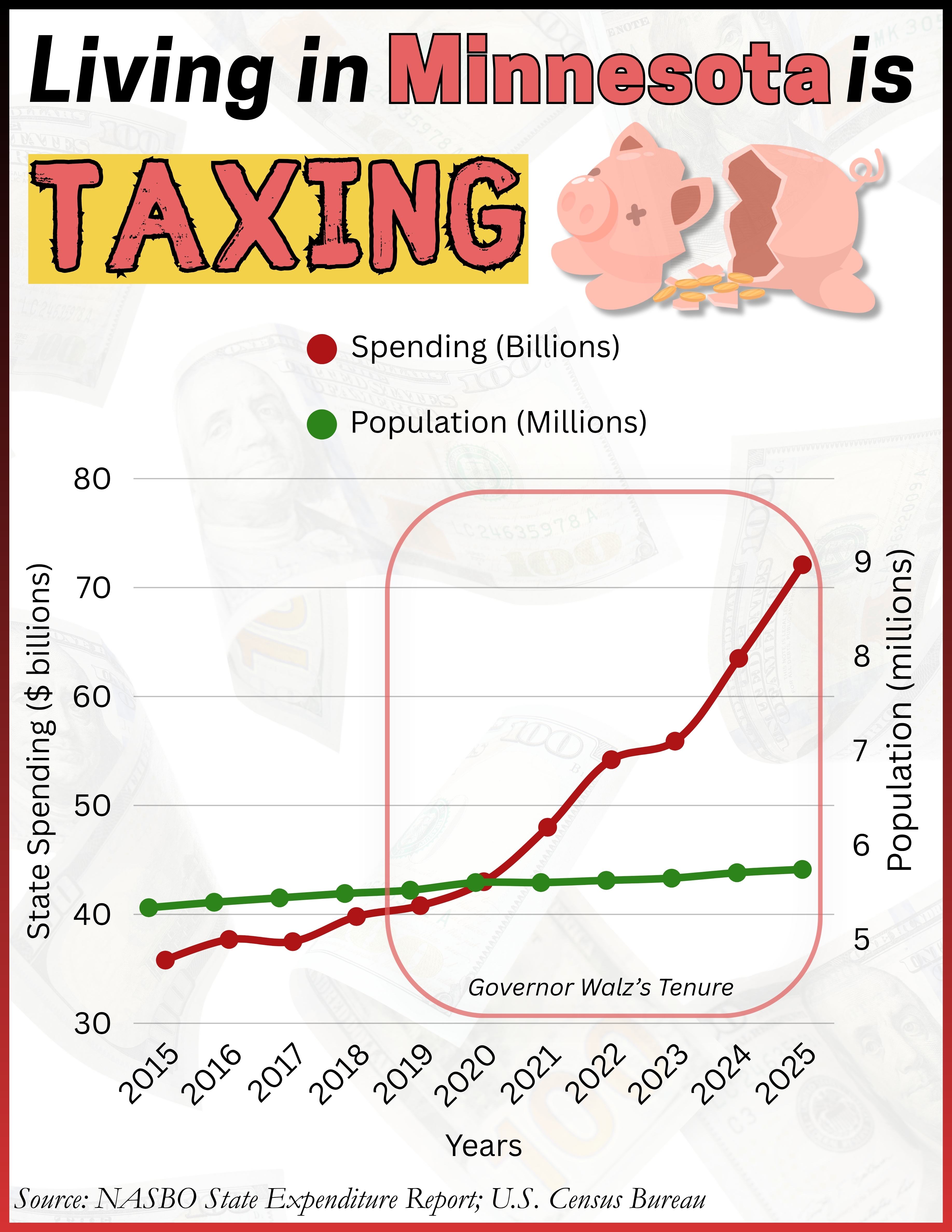
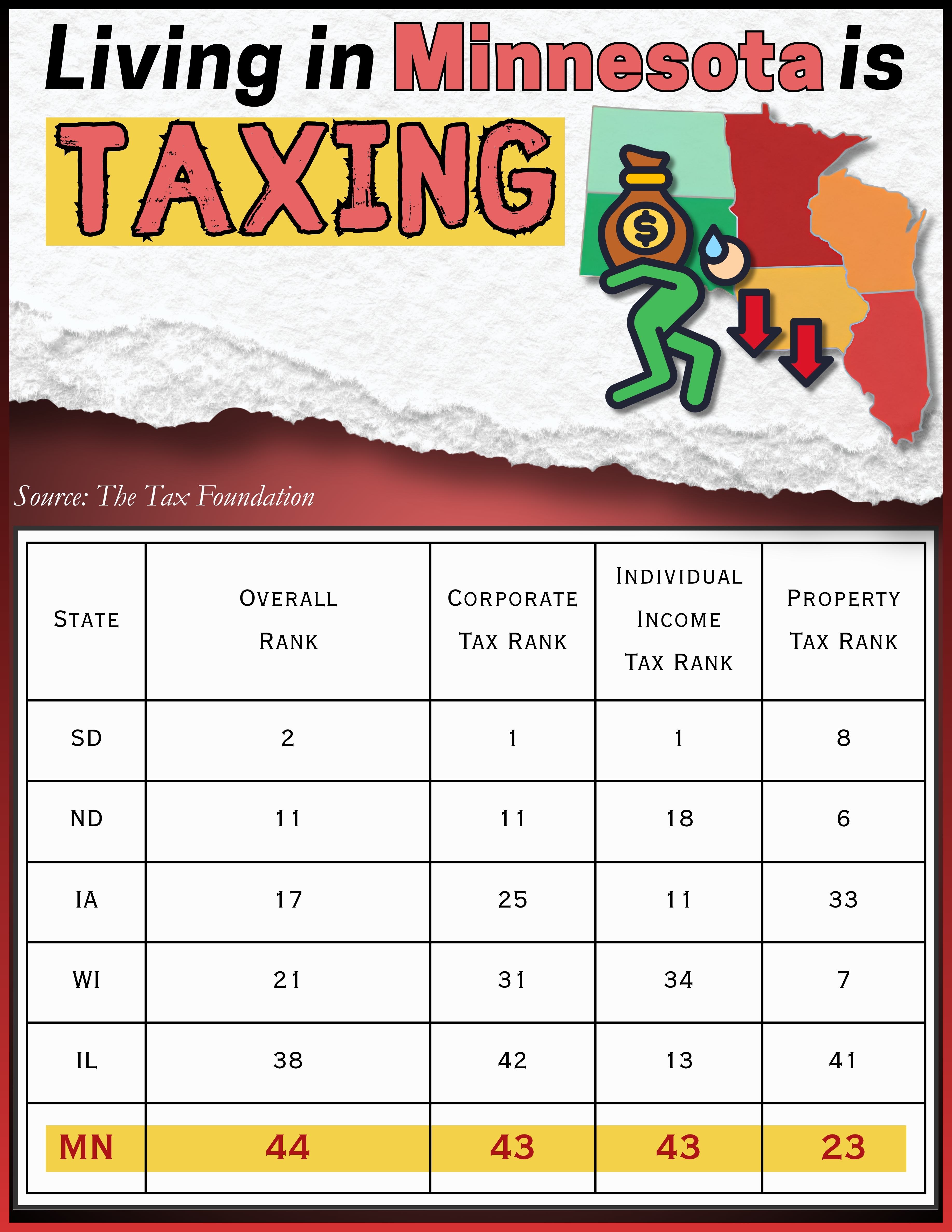
Under DFL control, the state budget has ballooned, devouring an $18 billion surplus while imposing $10 billion in new taxes — yet that still wasn’t enough to prevent future deficits. The Tax Foundation ranked Minnesota two places lower this year on its State Tax Competitiveness Index (from 42nd to 44th) keeping the state in the bottom 10 for another year. Data from the National Association of State Budget Officers and the U.S. Census Bureau shows state spending has risen 48% while population has grown just 6%.
“Minnesotans should not forget that Democrats spent the entire $18 billion surplus and raised taxes by $10 billion in the same year,” Senate Republican Leader Mark Johnson (East Grand Forks) said. “This has led to projected deficits and an unsustainable spending spree, yet Democrats continue to support tax increases at a time when Minnesotans desperately need relief from the high cost of living.”
Democrats have proposed new taxes on social media companies and advertising services, extending the sales tax to financial advice, creating a fifth tier of income taxes, imposing a new statewide property tax, and advancing a constitutional amendment to raise sales taxes for housing.
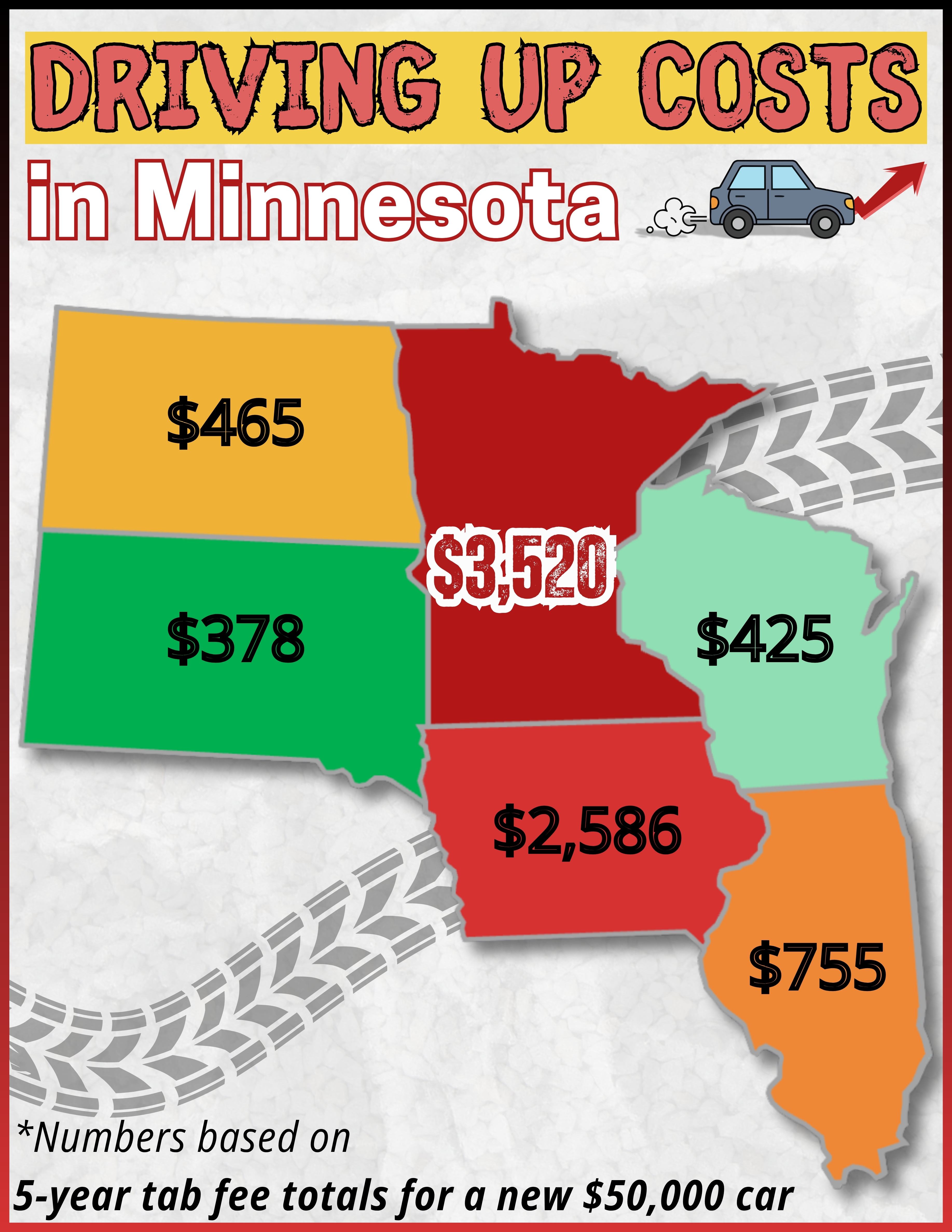
“One of the biggest issues we are hearing about is tab fee increases,” said Sen. John Jasinski (Faribault), the Republican lead on transportation. “When Senate Republicans held the majority, we funded our transportation needs without raising taxes. Rather than prioritize funding and eliminate waste and abuse, Democrats ran full steam ahead to recalculate your tab fees, added an automatic gas tax increase tied to inflation, and proposed quintupling tab fees this year.”
That refers to comments made in committee by DFL Rep. Meg Luger-Nikolai, who said she may offer an amendment to quintuple tab fee rates to raise more revenue. On the House floor, DFL Transportation Finance Committee Co-Chair Rep. Brad Tabke suggested Minnesota’s tab fees were among the lowest in the region, a claim that is demonstrably false.
In addition to tab fees, Republicans blame DFL spending and regulations for driving up property taxes across the state. “Democrats were warned by county leaders that their spending would impact property taxes, and they did it anyway,” said Sen. Michael Kreun (Blaine). “Surprisingly high property taxes are the result of unfunded mandates, overregulation and unsustainable spending coming out of St. Paul. Democrats forced local governments to raise property taxes across the state. Now they want to pile on even more pain by creating a new statewide property tax. Property taxes should not be the default piggy bank for St. Paul’s spending addiction. Minnesotans deserve affordability, not another tax increase hidden in their property tax bill.”
Despite concerns from local leaders, Democrats introduced a bill to add a new state property tax segment that could cost some homeowners thousands of dollars each year on top of their local property taxes.
In contrast, federal tax changes are delivering some of the largest refunds in years, up nearly 11% and averaging about $3,500 nationally, with nearly half of all filers using new deductions. Additionally, 25% of filers have taken home more of their pay by deducting taxes on tips and overtime. Yet Democrats in Minnesota remain opposed to reducing taxes on tipped and overtime wages, despite bipartisan support during the 2024 presidential campaign.
“The simple reality is that it is too taxing to live in Minnesota, and Democratic spending is making life less affordable,” Johnson added. “Rather than reducing our budget growth, supporting families and workers with tax cuts, and prioritizing core services, Democrats are dedicated to finding more revenue and pinching the budgets and pockets of every Minnesotan as though every day is Tax Day.”
Graphics:
Driving up costs: 5-year tab fee totals
Living in Minnesota is taxing: 2026 state competitiveness rankings
Living in Minnesota is taxing: State budget growth vs. population growth