Friends and Neighbors,
Last week marked a busy and important stretch at the Capitol as we worked to meet key deadlines for bill introductions. Since the start of session on February 17, I’ve had the opportunity to meet with roughly 100 organizations and constituent groups to discuss the issues that matter most to our communities and the legislation being considered in the Senate. That’s in addition to the committee hearings, floor sessions, and commissions I serve on each week.
I share this not for recognition, but to reinforce a commitment: being accessible and engaged with the people I represent. Hearing directly from you - your concerns, your ideas, and your perspectives - is essential to making thoughtful, informed decisions.
I’ve had conversations with a wide range of voices, from homeschool advocates to small business owners to those focused on community and social issues. While we may not always agree on every approach, I continue to find that there is often more common ground than we might expect.
That’s an important reminder. If we are willing to listen, engage, and work through our differences, we can continue striving toward that goal our founders set out - to build a more perfect union.
I remain committed to keeping that dialogue open as we work together toward a stronger Minnesota.
|
Thank you to everyone who continue to send in your concerns to me. This week, we'll highlight another handful of topics in which we received the most emails. As always, never hesitate to reach out if you have a question or concern about legislation you see moving through the legislature. Let's work together to make sure that we are all part of an informed citizenry.
|
Restoring Balance to Minnesota's Housing Market
|
Minnesota’s housing challenge didn’t happen overnight - and it won’t be solved overnight either. But the root issue is clear: we’re not building enough homes.
For years, regulations, rising costs, and delays have made it harder to build, while higher interest rates have added even more strain on families. I believe we need more housing—especially for young families and first-time buyers—but how we get there matters.
We’re seeing some encouraging signs locally. In North Branch, nearly $17 million in new housing value was added through 99 permits last year. That’s progress. But statewide, the picture is still concerning. The median age of a first-time homebuyer in Minnesota is now 38. Monthly mortgage payments average around $2,500. And we’re short more than 100,000 homes.
We also need to be honest about what’s driving costs. State mandates and regulations have increased the price of building, and those costs are passed on to buyers. When people can’t afford to move, fewer homes become available—making it harder for the next generation to buy in.
|
I believe land use decisions belong at the local level. Every community is different, and local leaders are accountable to their residents. If people want a different approach, they can elect new leadership. That’s why I have concerns with efforts like SF4123that move toward one-size-fits-all, top-down solutions.
|
Subsidies alone won’t fix a shortage. The solution is simple: build more homes by reducing unnecessary mandates, improving affordability, and trusting local communities to lead.
Minnesota doesn’t have a shortage of ideas—we have a shortage of housing. To restore affordability, we need to build more, regulate responsibly, and trust Minnesotans to invest in their communities.
|
Office of Animal Protection
|
I’ve heard from many of you regarding SF1163, which would create a new Office of Animal Protection within the Department of Public Safety.
Let me start by saying this: Minnesotans care deeply about animal welfare and I do as well. Across our state, law enforcement, veterinarians, farmers, and humane organizations are already doing important work to prevent neglect and respond to abuse. Their efforts matter and deserve support.
Minnesota also has strong animal protection laws in place, along with a network of agencies and nonprofit partners actively engaged in this work. While the intent behind this bill is understandable, I believe we should be cautious about creating a new layer of government when systems already exist.
At a time when we are focused on accountability and restoring trust in how taxpayer dollars are used, our priority should be strengthening what’s already in place - improving coordination, training, and enforcement - rather than expanding bureaucracy. For this reason, I voted no on this bill. I look forward to seeing authorities holding those bad actors accountable, as they should, for atrocious crimes such as abusing animals.
|
|
Reconsidering Minnesota’s Nuclear Energy Moratorium
|
I believe Minnesota is at a crossroads when it comes to our energy future.
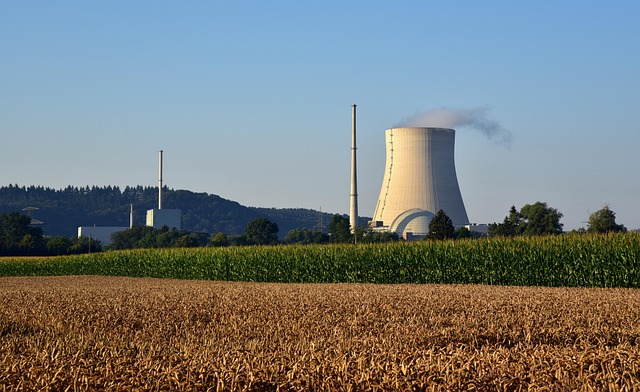
A recent report warned that if we fail to lift our 32-year moratorium on new nuclear energy, we risk falling short of our 2040 clean energy goals. That’s a serious concern and one we cannot ignore.
This is about more than policy. It’s about reliability and affordability for Minnesota families and businesses. With electricity demand rising - especially with the growth of AI and data infrastructure - we need an energy strategy that is dependable, not reactive.
|
Nuclear energy is part of that conversation. It remains one of the only proven sources of reliable, emissions-free power available at scale. Meanwhile, new technologies are making nuclear energy safer, more efficient, and more adaptable than ever before.
At the same time, major employers and innovators are investing heavily in nuclear energy to meet growing demand. Minnesota risks falling behind if we fail to keep up.
|
If we are serious about energy independence, economic growth, and meeting our environmental goals, we need an all-of-the-above approach.
That starts with lifting Minnesota’s outdated nuclear moratorium.
Doing so doesn’t mandate new projects but it allows the conversation to move forward. It opens the door to innovation, investment, and a more reliable energy future for our state.
|
I want to provide an update on two bills under consideration, SF4160 and HF3965, which address the potential prohibition of paraquat.
This issue has sparked significant discussion in Minnesota and across the country. Paraquat is a widely used herbicide in agriculture, but it is also highly toxic, and some research has raised concerns about a possible link to Parkinson’s disease.
At the federal level, the EPA recently announced it will reassess the safety of paraquat and require updated data on its real-world use. At the same time, more than 70 countries have already banned it, and several states are now considering similar restrictions.
This is a complex issue. Agriculture plays a critical role in Minnesota’s economy, and many producers rely on tools like paraquat to maintain crop yields. At the same time, we must carefully consider the potential impacts on public health, water, and soil.
As these bills move forward, I will be working with colleagues and stakeholders to better understand the full picture, including the impact on farmers, possible alternatives, and what changes would mean for Minnesota.
As always, I encourage you to stay informed and share your thoughts as this discussion continues.
|
|
Protecting Innovation, Preserving Local Control
|
When I talk with constituents about non-disclosure agreements (NDAs), I emphasize a simple point: these agreements aren’t niche legal tools - they are widely used across industries to protect innovation, investment, and competitiveness.
From technology and manufacturing to healthcare and finance, NDAs help safeguard sensitive information, support job creation, and allow businesses (and even government) to negotiate responsibly on major projects like data centers.
My concern is when the state begins limiting NDAs for one industry while allowing them in others. That kind of selective approach creates a slippery slope and risks expanding government overreach into areas better left to the private sector.
Just as importantly, I believe these decisions belong at the local level. Minnesota’s communities are diverse, and one-size-fits-all policies rarely work. Local governments should have the ability to balance transparency with the flexibility needed to attract investment and grow their economies.
We can protect both accountability and opportunity, but that starts by trusting our communities and applying policies fairly.
|
|
Ensuring Fairness for Minnesota’s Peace Officers
|
I recently introduced legislation to bring greater fairness and consistency to how Minnesota handles Brady-Giglio lists (prosecutor-maintained lists that can raise questions about an officer’s credibility).
Right now, there are no uniform standards across our state. In some cases, an officer can face discipline - or even lose their career - simply for being placed on one of these lists, often without a clear process to challenge that designation.
My bill ensures that law enforcement agencies cannot take automatic disciplinary action based solely on a Brady-Giglio listing. Just as important, it establishes a process so officers have a fair opportunity to respond and protect their reputations. Accountability matters, but so does due process.
I’m encouraged that this effort has earned strong support from both the Minnesota Chiefs of Police Association and the Minnesota Sheriffs’ Association. They recognize, as I do, that clear and consistent guidelines are essential not only for officers, but for maintaining trust in our justice system.
The bill recently passed the Judiciary and Public Safety Committee with unanimous support and now moves to the Finance Committee. I look forward to continuing the work to ensure Minnesota supports both public safety and the fair treatment of those who serve.
|
|
Cartel Activity Hits Close to Home
|
A recent article in the Chisago County Press highlights a troubling reality: cartel-linked drug activity connected to the Sinaloa Cartel has reached into Minnesota communities. It’s a reminder that the challenges we face don’t begin or end at a distant border, they can impact neighborhoods right here at home.
We already ask a great deal of our law enforcement and judicial system to keep up with crime and ensure accountability. When additional pressures are added, especially from illegal activity that benefits from open border policies, it creates more opportunities for bad actors to exploit the system and do harm.
I’m grateful for the strong coordination between local law enforcement, task forces, and federal partners working to protect our communities. But this is not just a law enforcement issue, it’s a community one. Prevention, awareness, and support for those struggling with addiction all play a role.
By staying informed, supporting those on the front lines, and working together, we can continue building safer, healthier communities across Minnesota.
|
Serving you at the Senate is an honor. If you ever have questions, concerns, or need assistance with a state agency, please don't hesitate to reach out. My Legislative Assistant, Melissa Field, is also a great resource and can assist if I'm not immediately available.
📞Phone: 651-296-5419
📧Email: sen.mark.koran@mnsenate.gov
Melissa's contact information:
📞Phone: 651-296-6200
📧Email: melissa.field@mnsenate.gov
I hope to see you in the community soon!
Best,
|
Capitol Address
95 University Avenue W.
Minnesota Senate Bldg., Room 2203
St. Paul, MN 55155
651-296-5419
|
|